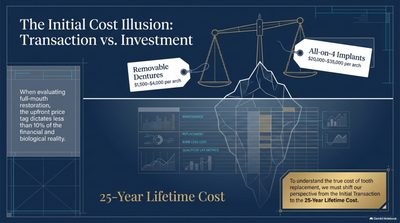
A Big Number and a Monthly Payment Are Not the Same Decision
A full-mouth restoration is a large commitment, and the total is usually what ends the conversation rather than the treatment itself. The useful reframe is straightforward: the clinical plan is fixed, but the way it is paid for is not. Structured properly, a lifetime investment becomes a manageable monthly figure instead of a single intimidating total. This is written for people around Scottsdale, AZ who are looking into full smile makeover and want the honest version rather than a sales page.
The pathways below are the ones that make that shift practical, and each has a different job in the sequence.

The Financing Routes Worth Asking About
| Route | Typical structure | Best used for | What to confirm |
|---|---|---|---|
| Promotional-APR healthcare credit | 0% promotional APR terms; no interest during the promotional window | Managing the upfront phase without interest penalties | Promotional period length and the rate that follows it |
| Patient financing lender | Finances up to $50,000 specifically for full-mouth restorations; low fixed monthly payments | Spreading a large plan across a multi-year term | Whether prepayment penalties or hidden fees apply |
The first route is designed for the early phase of treatment, when the surgical and preparatory costs land together. Promotional terms at 0% exist for exactly that window, and they are most valuable when the promotional period comfortably covers the work being financed.
The second route is built for scale. Financing capacity up to $50,000 aimed specifically at full-mouth restorations, repaid in low fixed monthly payments, is a structure that fits a plan involving multiple procedures. The detail to verify before signing is the exit: no prepayment penalties and no hidden fees means paying the balance early costs nothing extra and the quoted monthly figure is the real one.
Sequencing the Payment to the Treatment
Restorations unfold in phases, and financing works better when it follows that order rather than treating everything as a single transaction.
- Diagnostic and preparatory phase: imaging, extractions, and any grafting come first, and this is where promotional terms do the most work.
- Surgical phase: placement of the anchors, typically the largest single block of cost.
- Prosthetic phase: the permanent restoration, delivered after healing is confirmed.
- Maintenance phase: routine hygiene and monitoring, which is not the part that needs financing.
Matching a financing structure to that sequence keeps the interest-bearing window as short as possible and avoids paying for phases that have not started yet.
Insurance and Pre-Tax Accounts
Coverage for full-mouth restoration is rarely described as complete, but it is not usually zero either. Plans commonly cover the preparatory work — extractions, imaging, and basic restorative steps — and sometimes redirect a removable-prosthetic allowance through an alternative-benefit provision. Worth asking about separately: whether the treatment qualifies as a medical expense, because if it does, pre-tax health accounts become a legitimate part of the funding plan.
Using pre-tax dollars on a qualifying expense produces a real reduction in the out-of-pocket total rather than a temporary discount on a sticker price. That reduction compounds, because it applies to every dollar routed through the account.
What a Good Financial Plan Contains
A plan worth the name does not stop at a monthly figure. It should show the phases in order, attach a cost to each one, indicate which phases are financed and which are paid directly, and project the total across the treatment window rather than the first invoice. It should also account for what happens if the timeline shifts, since healing determines when the prosthetic phase begins.
Presented that way, the number stops being intimidating. It becomes a schedule.
Comparing Offers Without Getting Lost
Financing offers become comparable once the same four questions are asked of each one. What is the rate, and does it change after an initial period. What is the term, and does it match the treatment timeline. Are there prepayment penalties or fees that only appear at signing. And what is the total repaid rather than the monthly figure.
A promotional rate and a fixed-rate term are answering different problems, so comparing them on the headline number alone usually produces the wrong answer. The promotional structure rewards finishing the financed work inside its window. The fixed structure rewards predictability across a longer plan. Choosing between them is a question about the shape of the treatment, not about which number looks smaller on a page.
One further question belongs on the list: what happens if the timeline shifts. Healing determines when the prosthetic phase begins, so a plan built on fixed dates should say what happens when those dates move.
The Next Step Is a Number, Not a Sales Pitch
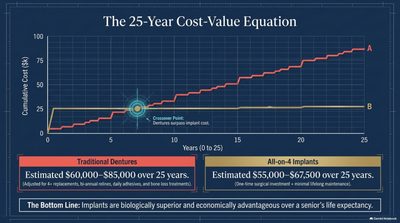
The only way to move from structure to something concrete is a consultation that reviews your actual clinical needs and produces a personalized 25-year financial plan: what happens in each phase, what each phase costs, and how the payments map onto the treatment schedule. That plan is the deliverable, and it is the point at which a large commitment stops being abstract. Call 480-624-2577 to start that conversation.
Free calculators: implant financing planner cost benchmark table hidden fee calculator — all on the Scottsdale tools hub.
Frequently Asked Questions
Does 0% promotional APR mean the whole treatment is interest-free?
Only within the promotional window. Those terms apply during the period, and a different rate typically follows it, so the promotional length should be compared against the treatment timeline before relying on it.
What does a fixed monthly payment protect against?
Rate changes and unclear totals. A fixed payment with no hidden fees means the monthly figure you agree to is the figure you pay across the term.
Should I finance the maintenance phase too?
Usually not. Financing is most useful for the large surgical and preparatory blocks. Routine maintenance is a smaller recurring cost that does not benefit from a multi-year term.