What Happens Under the Gums After a Tooth Is Lost
The financial side of tooth replacement gets most of the attention, but the body keeps a parallel account. Once a natural tooth root is gone, the bone that surrounded it no longer receives the mechanical stimulus that kept it dense. The body reads idle bone as unnecessary bone and begins to reabsorb it. Most people who read this are comparing chipped tooth options around Scottsdale, AZ, so what follows sticks to the details that change in practice.
That process is not gradual in the way people expect. It is front-loaded, and the first year does most of the damage.
The Three Stages of Resorption
| Stage | Timing | What is happening | What becomes visible |
|---|---|---|---|
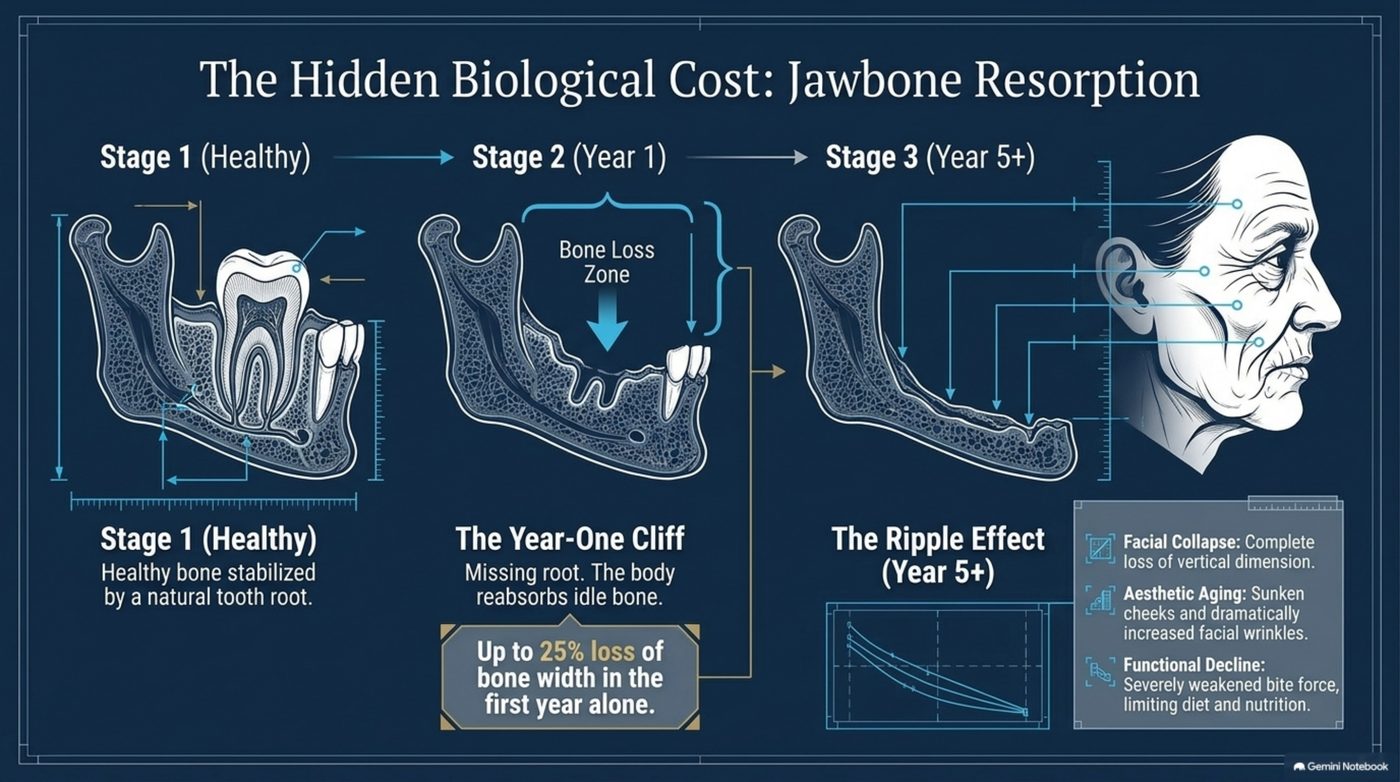
| Stage 1 — Healthy | Before loss | Bone is stabilized by a natural tooth root and stays dense | Normal facial contour and bite support |
| Stage 2 — Year 1 | First 12 months | The missing root leaves the site unstimulated; the body reabsorbs the idle bone | Up to 25% loss of bone width in the first year alone |
| Stage 3 — Year 5+ | Five years and beyond | Continued narrowing changes the foundation the face rests on | Facial collapse and loss of vertical dimension |
The Ripple Effect Above the Jaw
Bone loss is not a local event. Once the foundation narrows, three changes follow in sequence.
- Facial collapse. The loss of vertical dimension shortens the lower face and changes how the lips and chin meet.
- Aesthetic aging. Sunken cheeks and a marked increase in facial wrinkles appear as the tissue that was supported by bone loses its scaffolding.
- Functional decline. Bite force weakens and the range of foods someone can comfortably eat narrows, which in turn affects diet and nutrition.
This is why the same process surfaces in two very different conversations. It is a prosthetic-fit problem, because the appliance has less ridge to sit on. It is also an appearance problem, because the face is resting on less bone. Where the change in facial structure has already begun, the graduated approach described in our guide to the aging smile maps the sequence of corrections and shows why the foundation has to be addressed before the surface.
Why the First Year Sets the Trajectory
Up to 25% of bone width can be lost in the first year alone. That single statistic reframes the entire timeline: the most consequential window is the one immediately after tooth loss, which is also the window in which most people are still deciding what to do. Waiting is not neutral. The foundation is changing while the decision is pending, and every option that comes later has to account for what has already been lost.
Why Some Foundations Hold and Others Do Not
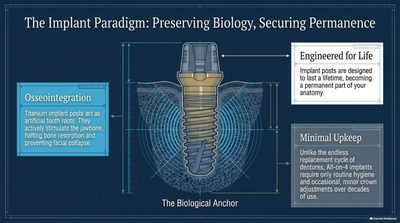
Bone responds to load. A natural tooth root loads the jaw with every bite, which is why healthy bone stays dense for decades. Titanium implant posts do the same job mechanically: they are placed into the jaw and loaded, so the surrounding bone continues to receive the stimulus that keeps it. That is the difference between a foundation that stabilizes and one that narrows year after year.
Where bone has already been lost, the amount remaining determines what can be placed and whether grafting is needed first. That is a clinical question answered with imaging rather than a timeline, and it is the reason a scan comes before a plan.
What Can Still Be Done Once Bone Is Gone
A ridge that has narrowed is not a closed door, but it does change the sequence. Reconstruction typically comes before placement, which adds a phase and extends the overall timeline. The earlier the assessment happens, the more of the original foundation is still available to build on, and the fewer procedures the reconstruction requires.
Why This Shows Up in the Mirror First
Most people notice jawbone loss in a photograph before anyone mentions it clinically. The change is not in the teeth; it is in the proportions around them. As the ridge narrows and vertical dimension shortens, the lower face compresses, the cheeks lose volume, and the skin that was stretched over supporting bone begins to fold.
That is why an aging smile is rarely a single problem. It is a prosthetic problem and an appearance problem running on the same underlying change. Treating only what is visible leaves the foundation to keep narrowing, which means the visible result has to be maintained against a moving surface. Addressing the foundation is what allows the visible part of the plan to hold.
It also explains why timing matters more than most people assume. The first year accounts for up to 25% of total width loss, so the window in which the foundation is most receptive to a stabilizing solution is also the window that closes fastest.
Free calculators: jawbone loss estimator implant vs denture matrix healing timeline calculator — all on the Scottsdale tools hub.
Frequently Asked Questions
Is the first year really the most damaging?
It is the fastest period of change. Up to 25% of bone width can be lost in that first year, and the rate slows afterward but does not stop while the site remains unloaded.
Can bone that has already been lost be rebuilt?
Partly, and it usually requires grafting before placement. The more bone still present, the simpler the reconstruction and the fewer procedures it takes.
Does a denture protect the jawbone?
No. A removable appliance rests on the gums rather than loading the bone, so it provides no stimulus to keep the ridge dense. It covers the change without interrupting it.